
by / por Mariana Lourenço
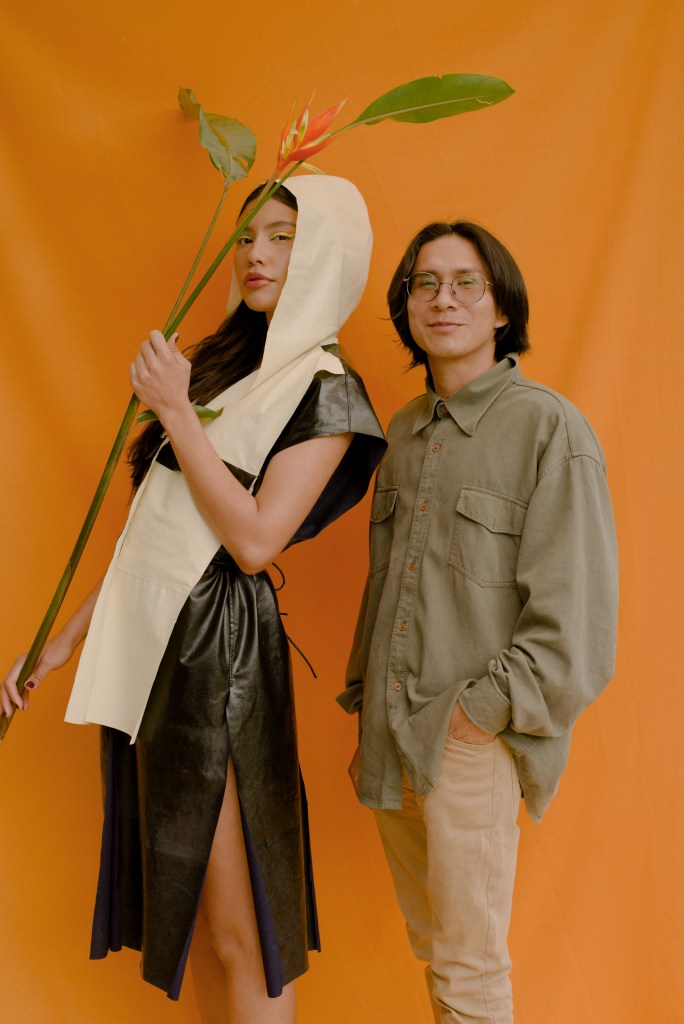
Sioduhi carries with him the ancestral heritage of the Piratapuya people of Alto Rio Negro, Amazonas. He has been recognized by the Fashion Futures 2023 Award and won the ECOAR Competition. His brand, Sioduhi Studio, is a benchmark in Amazonian indigenous futurism and uses Maniocolor®, a revolutionary textile dye made of cassava peel, to propose new possibilities for innovation in the fashion industry. Featured at Brasil Eco Fashion Week (BEFW), Sioduhi strengthens communities and cultures, promoting inclusion and advocating for pride in indigenous origins and the resistance of Amazonian peoples, while embracing everyone who lives in this shared home.
We are aware of the importance of including indigenous knowledge in the production process. In your opinion, how does this integration contribute to environmental and cultural regeneration?
For over five hundred years, our technologies have not been considered to be art or science; they have been seen as something that is not refined enough. However, our knowledge and practices are highly precise, including art, artifacts, crafts, and for the most part developed with regenerative materials. Today, with the need to consider sustainability, buen vivir [“good living”] and circularity, the [fashion] industry begins to look at these chains that have been around for millennia. This is the case of the SAT-RN (Traditional Agricultural System of the Negro River), in the Amazon, registered as intangible cultural heritage by Iphan. Continuity of knowledge is a major challenge in indigenous communities due to the progress of consumerism, mining, resistance to giving up non-renewable materials, and ultra-fast behaviors in the world. The more we include knowledge and ways of being of indigenous peoples, the more we will move towards mitigating the challenges of our century.
Maniocolor® is an amazing innovation. How did the inspiration to develop this natural dye come about?
It is a textile dye based on cassava peel from the Amazon – the part of the root that is considered to be waste is reintroduced into the fashion ecosystem in an essential role: dyeing. My experience with natural dyeing first started during [the process of] my second capsule collection, “Pamɨri 23” (2021), when we applied aroeira bark dye to a jacket. However, I later became aware that the aroeira tree is actually under threat of extinction. Therefore, my partner and I looked at the pink cassava peel discarded from the Izcuchaca market, in Cusco, Peru. Through this observation and research on the impacts of synthetic dyeing on bodies of water, and with encouragement from the Inova Amazônia Program (SEBRAE Nacional), we developed the Maniocolor® Technology. It is connected to traditional agricultural systems in the Amazon, whether indigenous or not. It is noteworthy that natural alternatives are not always sustainable: a historical example is the tree that bears the name of our country, Pau Brasil [brazilwood].
Tell us more about your process of “un-bubbleing” and returning to Amazonas after living in a huge city like São Paulo.
It was very necessary to move from the place that is considered as the hub of the fashion industry to one made invisible by the rest of Brazil. I experienced different difficulties, and the biggest ones were the result of climate change: I experienced the historic flood in Rio Branco/AC, the historic drought in Amazonas, fires and floods of smoke and soot throughout the city of Manaus and nearby towns. Realizing how much the Amazon is romanticized and, at the same time, made invisible by the media, hurt me a lot as an indigenous Amazonian, and made me certain of how I was living in a bubble in the Southeast. My great joy was reuniting with family, friends and cultural movements in the region, and fighting alongside them. The result of this return was the collection “Amõ Numiã: Ontem, hoje e amanhã” (2023), which denounces climate injustice and recovers the oral transmissions of the origins of the world, about the handling of Alto Rio Negro, in Amazonas, by the first women in a matriarchy.
How do you envision decentralized fashion?
As more collaboration, more collective thinking, and transparency. Especially when we talk about fashion made outside the south and southeast of Brazil. In the sense of not only inspiration, but mainly investing and promoting local, creative professionals from the north and northeast regions. With this decentralization, I see the possibility of developing aesthetics, signs, modeling, and textile materials that respect the cultural and environmental identity of these regions. Amazonas, from my experience, is seen as a place only for commercialization and not for creation. And fashion has always been a space run by the ego, shallowness; now, we need to think beyond aesthetics, and include public policies and sustainability actions to raise consumer awareness and ensure the longevity of brands that propose this decentralized view.
You recently won the Fashion Futures award, from Instituto C&A. How does this achievement impact your trajectory?
I admit it was unexpected, as I was competing with incredible professionals. I was very excited to get the award at a time when I was returning to another fashion week, to present the new “Amõ Numiã” collection, designed in the Amazon by Amazonians. I thought back to all that had happened, and the people involved in the creative process, that we managed to stand out in the face of all the challenges and show that it is possible to create fashion outside the Brazilian south-southeast. The thought that filled me when I received the award was “often, we abandon our homes and our territories to live out our dreams, even though it shouldn’t be like that.” Finally, from 2024 onwards, the idea is to expand the successes achieved with Instituto C&A and other partners.
What inspires you?
My experiences, the constant search to understand these two worlds, my world and the non-indigenous world. The recognition of the struggles us indigenous peoples face at national and local levels in the Amazon, in the Alto Rio Negro Indigenous Territory. Traveling along the Rio Negro, Waupés and other tributaries, listening to my mother telling vivid stories of our ancestors (dɨporí mahsã) along the way. The cultural estrangement that I began to experience after leaving my indigenous community, the language, the different ways of looking at life. Taking pride in the ancestral technologies and knowledge that we, as indigenous peoples, possess. The diversity and resistance of the Amazon and Amazonians, whether indigenous peoples, quilombolas, riverside dwellers, extractivists and others.
Sioduhi carrega consigo a herança ancestral do povo piratapuya do Alto Rio Negro, Amazonas, e já foi reconhecido pelo Prêmio Fashion Futures 2023 e venceu o Concurso ECOAR. Sua marca, a Sioduhi Studio, é referência no futurismo indígena amazônico e utiliza o revolucionário Maniocolor®, corante têxtil à base de casca de mandioca, para propor novas possibilidades para a inovação na indústria da moda. Destaque no Brasil Eco Fashion Week (BEFW), ele fortalece comunidades e culturas, promovendo inclusão e enaltecendo a expressão do orgulho da origem indígena e da resistência das populações amazônicas, sem deixar de abraçar a todos que vivem nesta casa comum.
Sabemos da importância da inclusão de saberes indígenas no processo de produção. Na sua opinião, como essa integração contribui para a regeneração ambiental e cultural?
Há mais de quinhentos anos, nossas tecnologias não são consideradas arte ou ciência, são vistas como algo não refinado o suficiente. Porém, os nossos saberes e fazeres são de alta precisão, desde arte, artefatos, artesanatos e, em sua maioria, desenvolvidos com materiais regenerativos. Hoje, com a necessidade de olharmos para sustentabilidade, bem viver e circularidade, a indústria [da moda] passa a perceber essas cadeias vivas há milênios, como é o caso do SAT-RN (Sistema Agrícola Tradicional do Rio Negro), na Amazônia, considerado patrimônio imaterial conforme o Iphan. A continuidade dos saberes é um grande desafio nas comunidades indígenas devido ao avanço do consumismo, da mineração, da resistência a renunciar materiais não renováveis, e ao comportamento ultra fast no mundo. E quanto mais incluirmos saberes e modos de estar nos mundos indígenas, mais caminharemos em direção à mitigação dos desafios do século.
O Maniocolor® é uma inovação incrível. Como surgiu a inspiração para desenvolver o corante natural?
Ele é um corante têxtil à base de casca de mandioca da Amazônia – a parte da raiz considerada resíduo é reintroduzida no ecossistema da moda em um lugar essencial: o tingimento. Minha experiência com tingimento natural veio durante [o processo d]a segunda coleção-cápsula, “Pamɨri 23” (2021), quando aplicamos o tingimento de casca de aroeira em uma jaqueta. No entanto, posteriormente, tomei ciência de que a árvore de aroeira está sob ameaça de extinção. Diante disso, meu companheiro e eu começamos a observar a casca rosada de mandioca descartada do mercado de Izcuchaca, em Cusco, Peru. Por meio dessa observação e pesquisa sobre impactos do tingimento sintético nos corpos d’água, e com incentivo do Programa Inova Amazônia, do SEBRAE Nacional, desenvolvemos a Tecnologia Maniocolor®, conectada aos sistemas agrícolas tradicionais da Amazônia, sendo indígenas ou não. Vale ressaltar que nem sempre o natural é sustentável: um exemplo histórico é a árvore que carrega o nome do país, o Pau Brasil.
Conte mais sobre o seu processo de “desembolhar” e voltar para o Amazonas depois de viver em uma megalópole como São Paulo.
Foi muito necessário sair do lugar considerado centro da moda para um invisibilizado pelo Brasil. Passei por diferentes dificuldades, as maiores foram resultado das mudanças climáticas: vivenciei a cheia histórica no Rio Branco/AC, a seca histórica no Amazonas, queimadas e inundação de fumaça e fuligem em toda cidade de Manaus e municípios próximos. Perceber o quanto a Amazônia é romantizada e, ao mesmo tempo, invisibilizada pela comunicação, me doeu muito enquanto indígena amazônida, e me fez ter certeza do quanto eu estava “embolhado” no Sudeste. A grande felicidade foi reencontrar familiares, amigos e movimentos culturais da região, e lutar junto a eles. O resultado desse retorno foi a coleção “Amõ Numiã: Ontem, hoje e amanhã” (2023), que denuncia a injustiça climática e recupera a transmissão oral da origem do mundo, sobre o manejo do Alto Rio Negro, no Amazonas, pelas primeiras mulheres por meio do matriarcado.
Como você visualiza uma moda descentralizada?
Com mais colaboração, mais pensamento coletivo e transparência. Sobretudo, quando falamos de moda feita fora do eixo sul e sudeste. No sentido não só de inspiração, mas principalmente investir e promover os profissionais criativos locais do norte e nordeste. Com essa descentralização, vejo a possibilidade de desenvolver estética, signos, modelagem e materiais têxteis que respeitem a identidade cultural e ambiental dessas regiões. No Amazonas, pela minha experiência, vejo um local apenas de comercialização e não de criação. E a moda sempre foi um espaço do ego e do raso; agora, precisamos pensar para além da estética, e incluir políticas públicas e ações de sustentabilidade para sensibilizar os consumidores e garantir a longevidade das marcas que propõem esse olhar descentralizado.
Recentemente você ganhou o prêmio Fashion Futures, do Instituto C&A. O que essa conquista impacta na sua trajetória?
Admito que foi inesperado, pois estava concorrendo com personalidades incríveis. Fiquei muito emocionado por receber o prêmio no momento que estava voltando para mais uma semana de moda, para apresentar a nova coleção “Amõ Numiã”, concebida na Amazônia por amazônidas. Lembrei de todos os acontecimentos e das pessoas envolvidas no processo criativo, de termos conseguido sobressair diante de todos os desafios, e que é possível criar moda fora do eixo sul-sudeste. O pensamento que me preencheu quando recebi o prêmio foi “muitas vezes, abandonamos nossas casas e nossos territórios para vivenciar nossos sonhos, sendo que não deveria ser assim”. Por fim, a partir de 2024, a ideia é ampliar os êxitos obtidos junto ao Instituto C&A e outros parceiros.
O que te inspira?
A minha vivência, a constante busca de compreender esses dois mundos, o meu mundo e o mundo não indígena. O reconhecimento das lutas travadas por nós indígenas em nível nacional e local na Amazônia, no Território Indígena do Alto Rio Negro. As viagens pelo Rio Negro, Waupés e outros afluentes, escutando histórias vivas dos nossos antepassados (dɨporí mahsã) da minha mãe durante o percurso. O estranhamento cultural que passei a viver depois que saí da minha comunidade indígena, desde a língua, a forma diferente de ver a vida. O orgulho das tecnologias e saberes milenares que nós enquanto povos originários possuímos. A diversidade e a resistência das amazônias e amazônidas, sejam povos indígenas, quilombolas, ribeirinhos, extrativistas e outros.
 Mariana Lourenço